Acadia was supposed to be a two-night excursion from Rangeley. Instead, it became one night and a promise to come back.
There are few things less appealing than feeling like you have the flu while camping. With a 50-degree night, open-air sleeping and the knowledge that every trip to the bathroom requires climbing down a ladder and walking to the toilet block, sleep becomes elusory. By morning, the prospect of a second night had lost most of its charm.
We were determined, however, to see at least a little of Acadia before heading home.
Driving the Park Loop Road gave us a chance to understand how the park came to be. Acadia was pieced together through private conservation efforts, with families donating parcels of Mount Desert Island that eventually became part of the national park. That effort extended beyond the island to places like the Schoodic Peninsula.
John D. Rockefeller Jr. helped make the park accessible to visitors by funding 45 miles of carriage roads through the park. Built between 1913 and 1940, the gravel roads were separated from cars and now provide a network for walking and cycling. We didn’t have the energy, time or bikes to explore them this time, but when we come back, we know what to book in advance.
Acadia is busy. With Bar Harbor sitting beside the park, it felt more crowded than most national parks we’ve visited. Even though Smokey has nearly three times the annual visitors of Acadia, cramming them all on the coastal road does make it feel like one of the most tourist-dense parks. A once two-way road around the park has turned one-way in the busiest section, dedicating the right lane to full time parking.
The rocky shoreline felt familiar, like a gentler cousin of Vancouver Island, southeastern Tasmania and the Cape of Good Hope. Acadia’s Otter Cliff rises around 60 to 90 feet above the ocean, while Tasmania’s Tasman Peninsula reaches nearly ten times that height.
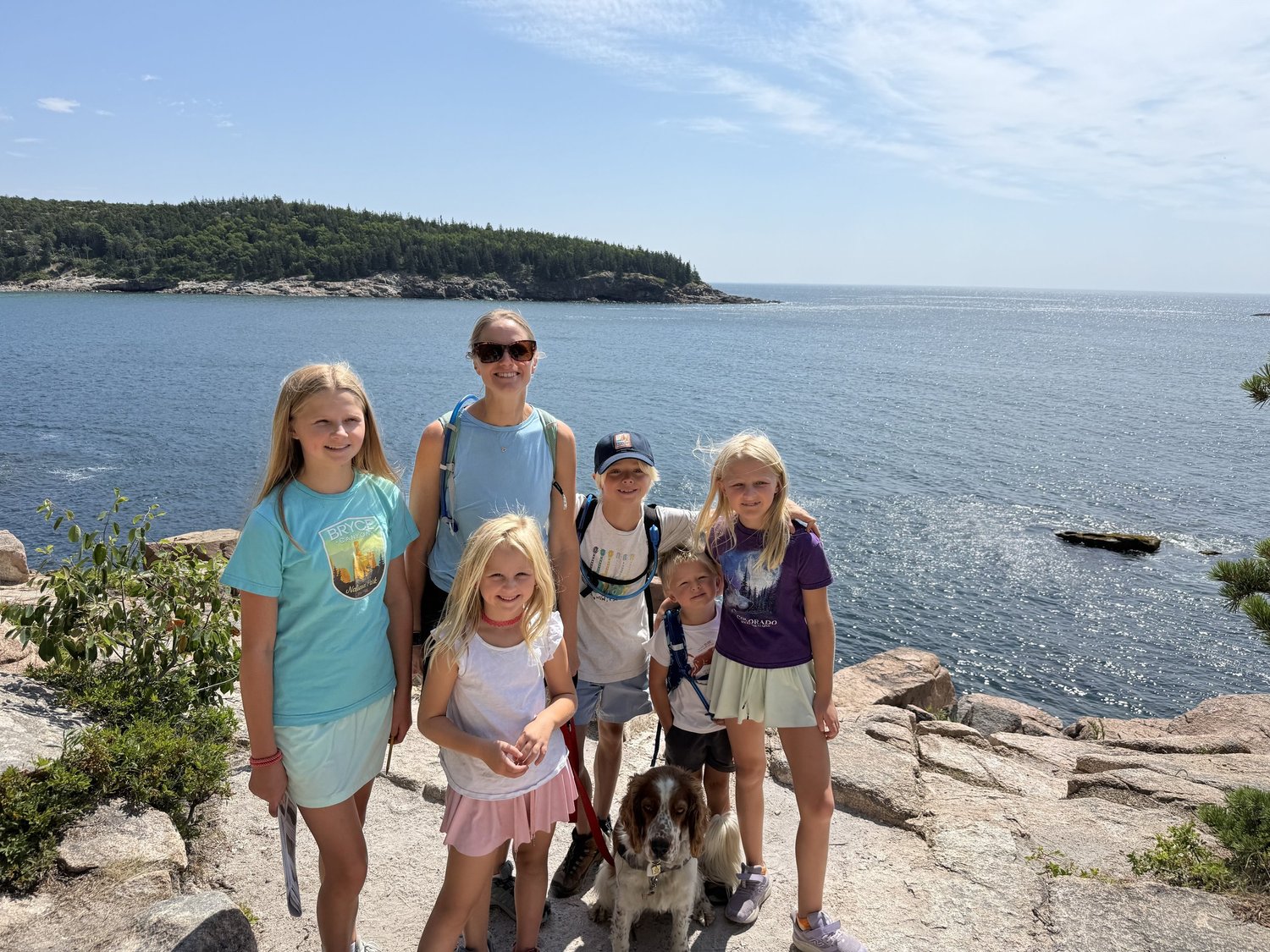
We did manage to climb onto one of the rocky outcroppings overlooking the eastern side of the island. Poky found the smells more exciting than the view and tried to investigate all of them at once, nearly taking us over the edge in the process. A thirsty, hot dog has little appreciation for cliffs, even if ‘small’ by global cliff standards.
We also managed to get everyone down to the water. The children briefly entertained the idea of swimming until their toes met the North Atlantic. That ended the discussion.
By afternoon, my body was making the decision for us. We pointed the Suburban back toward Rangeley and cut our planned visit in half.
Acadia remains unfinished for us. There are carriage roads to cycle, trails to walk and a ‘Sandy Beach’ to swim. Next time, hopefully without the flu.
