After the heat of Tennessee and hiking near the lower altitude visitor centers in the Smokies, Skyline Drive felt like a breath of fresh air. But driving on the ridge with a trailer, meant it wasn’t all easy sailing.
Entering at the southern end of Shenandoah National Park, we quickly discovered a challenge of travelling with a teardrop trailer. The small trailhead parking lots weren’t designed with trailers in mind, so we left ours along the entrance to the Blackrock Summit car park knowing we’d need to execute a wide three-point turn or a harrowing backup re-entry onto Skyline Drive.
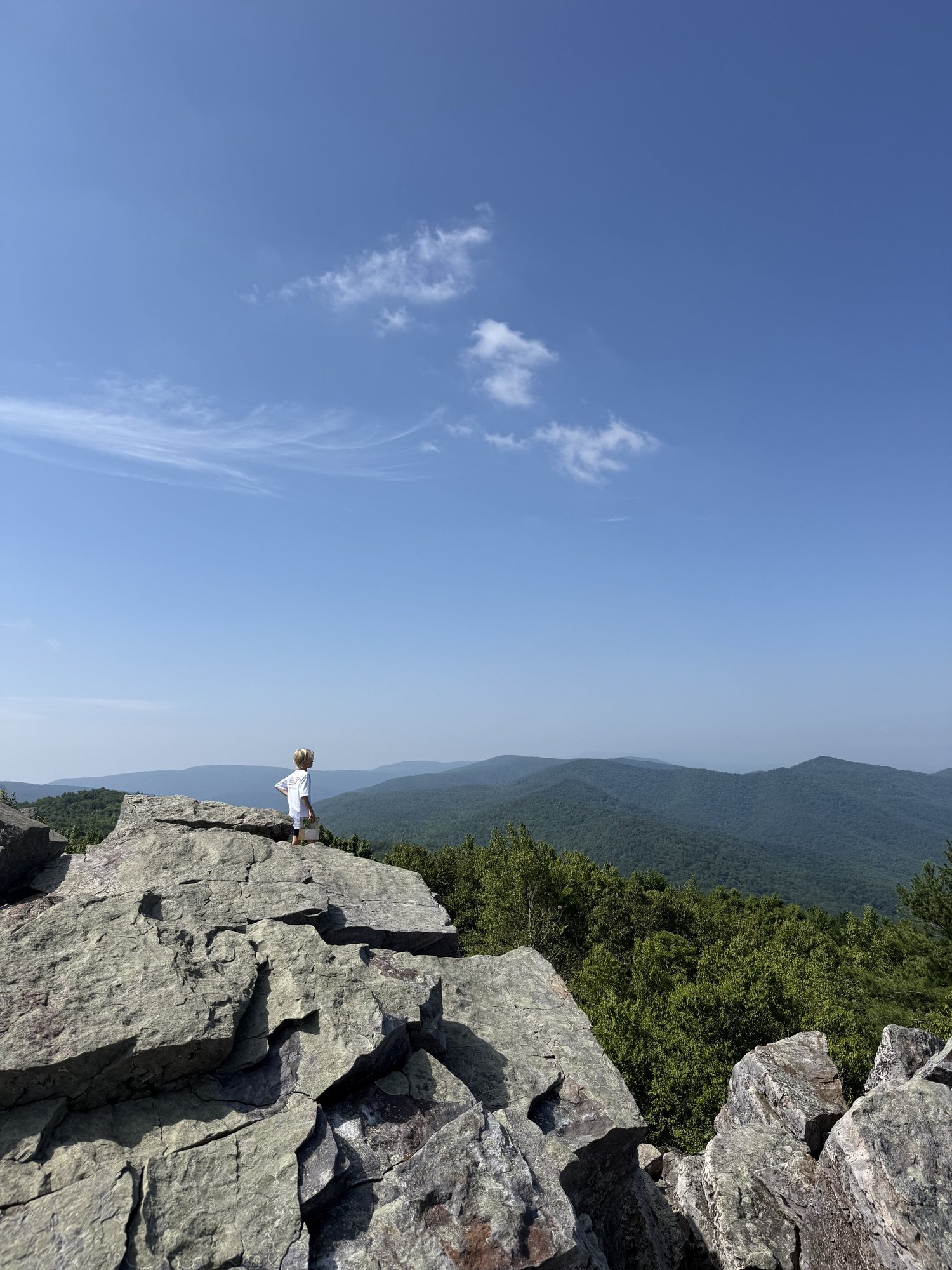
Blackrock Summit follows a section of the Appalachian Trail before climbing across the enormous boulders that give the hike its name. There was the usual gentle persuasion to get everyone moving, helped along by the promise of a few Mentos waiting back in the car. Before long, the trail became less about hiking and more about scrambling over rocks, with Poky happily joining us on one of the few dog-friendly walks in the park.
The summit offered wonderful views both across and beyond the park. Shenandoah protects a surprisingly narrow slice of the Blue Ridge, so from the rocks we could look into the forested ridges on one side and out across the Shenandoah Valley on the other. Standing beside the familiar white blazes of the Appalachian Trail, it was exciting to think that over the coming days we’d cross this famous trail several more times as we continued north towards Vermont and eventually into Maine.
With the trailer collected after a carefully executed (and Amy directed) three point turn, we continued north along Skyline Drive with the windows down and the sunroof open. The breeze, dappled shade and smell of the dense Appalachian forest made the winding drive relaxing for even those who get carsick in our crew. We reflected on the longevity of Skyline Drive–built during the Great Depression as a public works project, creating jobs while opening this remarkable landscape for future generations.
About fifteen miles before the main visitor centre we came across a mobile ranger station—a National Park Service van parked beside a small snack and souvenir shop. We thought we’d simply collect the children’s Junior Ranger badges, but the ranger insisted each child needed to complete the five required activities in their books. Our hike only counted as one and there were no exceptions for younger children. So we pulled lunch out of the trailer, found a picnic table, swatted away a determined collection of flies and gnats, and worked through the remaining activities together before the children were finally sworn in as Junior Rangers.
We briefly wandered through the little souvenir shop but decided we probably had enough things packed into the camper already. Instead, we climbed back into the Suburban, opened the windows once more and pointed ourselves north. With the Appalachian Trail never far away and Maine still many miles ahead, we felt like we were following an ancient mountain range and trail traversed for millennia.
